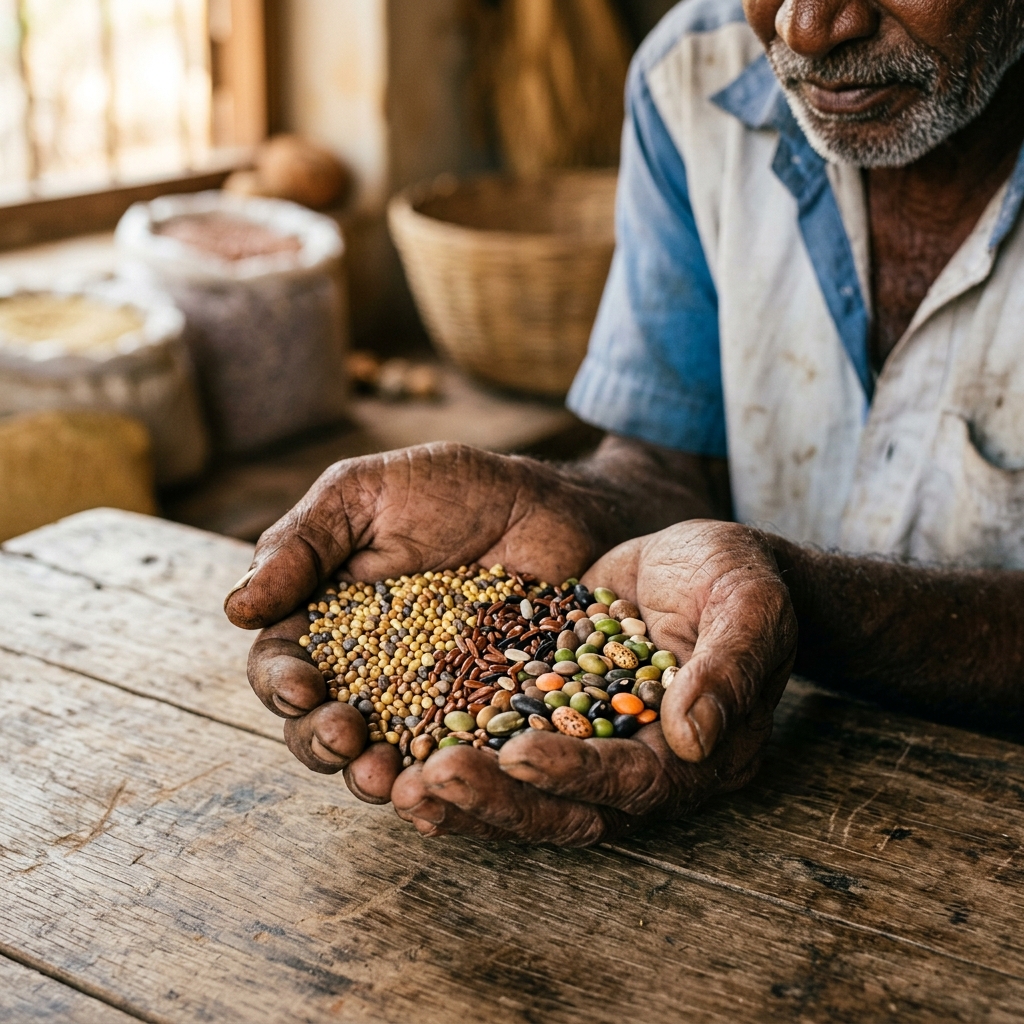
Farm to
Consumer Hubs
Bypassing complex middleman supply chains to deliver nutrient-dense, heritage crops directly from rural villages to urban families.
Restoring Margins to Farming Families
In traditional wholesale markets (APMC mandis), smallholder farmers face a complex web of commission agents, transporters, and multiple traders. By the time produce reaches city consumers, prices have doubled, yet the farmer receives less than 30% of the retail price.
Our Direct Linkage Model establishes a collaborative supply chain. We assist farming clusters in grading their own produce, packaging it, and organizing direct vehicle logistics to cooperative consumer housing societies and retail hubs. This raises farmer income by 50% while lowering retail costs for families.
Comparing Supply Chains
Our Supply Pipeline
Rebuilding agricultural distribution through systematic stages of village processing and logistics.
Grading & Sorting
Instructing farmers to inspect, remove blemished produce, and sort grains crop-wise to command premium prices.
Eco-Packaging
Replacing plastic wrap with branded biodegradable bags, ensuring optimal ventilation and premium presentation.
Cooperative Logistics
Pooling village harvests to fill delivery trucks, reducing transportation overhead per farmer by 40%.
City Deliveries
Direct drop-offs at pre-scheduled housing societies, cooperative buying hubs, and organic retail centers.
Nominate Your Housing Society
Bring healthy, organic chemical-free grains and fresh seasonal produce directly to your housing complex. We coordinate scheduled weekly drop-offs for registered clusters.