Restoring the
Living Soil
Increasing Soil Organic Carbon (SOC) and rebuilding organic biodiversity to secure sustainable livelihoods and healthy food.
What is Soil Organic Carbon & Why Does it Matter?
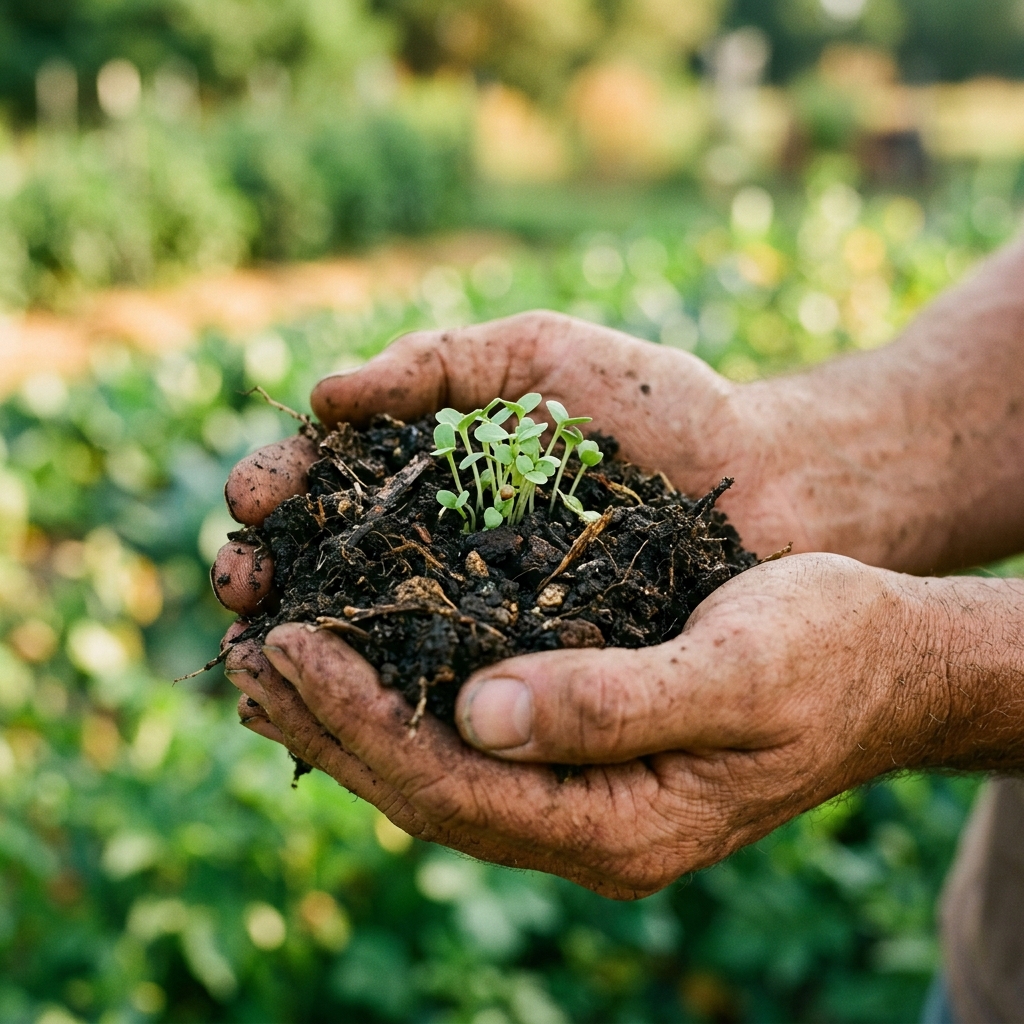
Soil Organic Carbon (SOC) is the carbon stored within soil organic matter — the decaying roots, leaves, microbes, and compost that form the foundation of fertile land. Healthy soil should contain at least 1% to 1.5% SOC.
However, decades of intensive chemical farming, monoculture, and burning crop residues have depleted SOC levels across Maharashtra to under 0.3%. This creates a cycle of dead soil, higher input costs, drought vulnerability, and declining crop yields.
The Carbon Cycle
1. Capture Carbon
Plants capture CO₂ via photosynthesis, feeding sugars down to roots.
2. Feed Microbial Life
Healthy microbes convert roots and organic wastes into stable humus.
3. Yield & Water Retention
Stable humus retains up to 10x its weight in water, feeding crops naturally.
How We Restore Soil Health
Applying scientific audits combined with traditional, cost-effective bio-restoration practices.
Scientific Soil Audits
Map baseline SOC and chemical residues before planning localized biological compost applications.
Homegrown Inputs
Train farmers to brew organic culture formulations (Jeevamrut, Dashparni) using local cow dung and urine.
Multi-Crop Rotations
Integrate nitrogen-fixing pulses, green manure, and deep-rooted traditional cereals to cycle soil nutrients.
Moisture Mapping
Build farm bunds, organic mulches, and low-cost drip infrastructure to reduce water evaporation by 50%.
The Results of Healthy Soil
A scientific, verified path to lower costs, better food nutrition, and carbon sequestration.
Enhanced Crop Resilience
Organic carbon-rich soil allows roots to penetrate deeper, protecting crops during heatwaves or delayed monsoon spells.
Nutrient Density in Harvest
Microbial networks absorb micronutrients (zinc, iron) and transfer them directly to crops, providing nutritious, premium-priced grains.
Carbon Sequestration
Restoring soil organic carbon serves as an active carbon sink, directly reducing greenhouse gas buildup and meeting ESG goals.
Help Us Restore Soil
Partner with Rotary to fund laboratory audits, compost equipment, and training for farming clusters.