Community
Seed Banks
Preserving India's agricultural heritage through community-owned seed repositories that safeguard biodiversity for future generations.
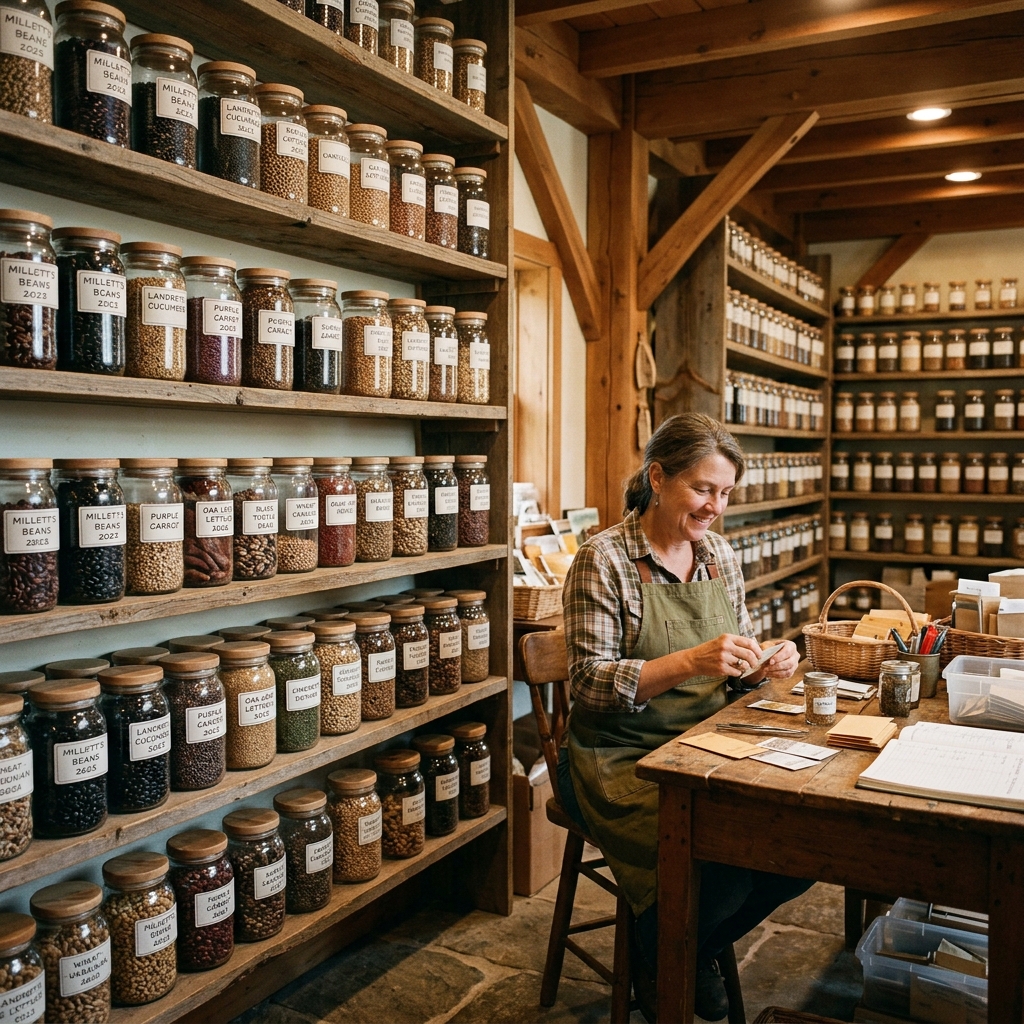
What is a Community Seed Bank?
A Community Seed Bank is a locally managed repository where indigenous, climate-resilient, and heritage seed varieties are documented, safely stored, exchanged, and multiplied by the farming community itself.
Unlike institutional gene banks, a community seed bank is owned and operated by the farmers who use it. This creates a living, breathing system of seed preservation that adapts to local needs and conditions—ensuring food sovereignty at the village level.
Why Indigenous Seeds Matter
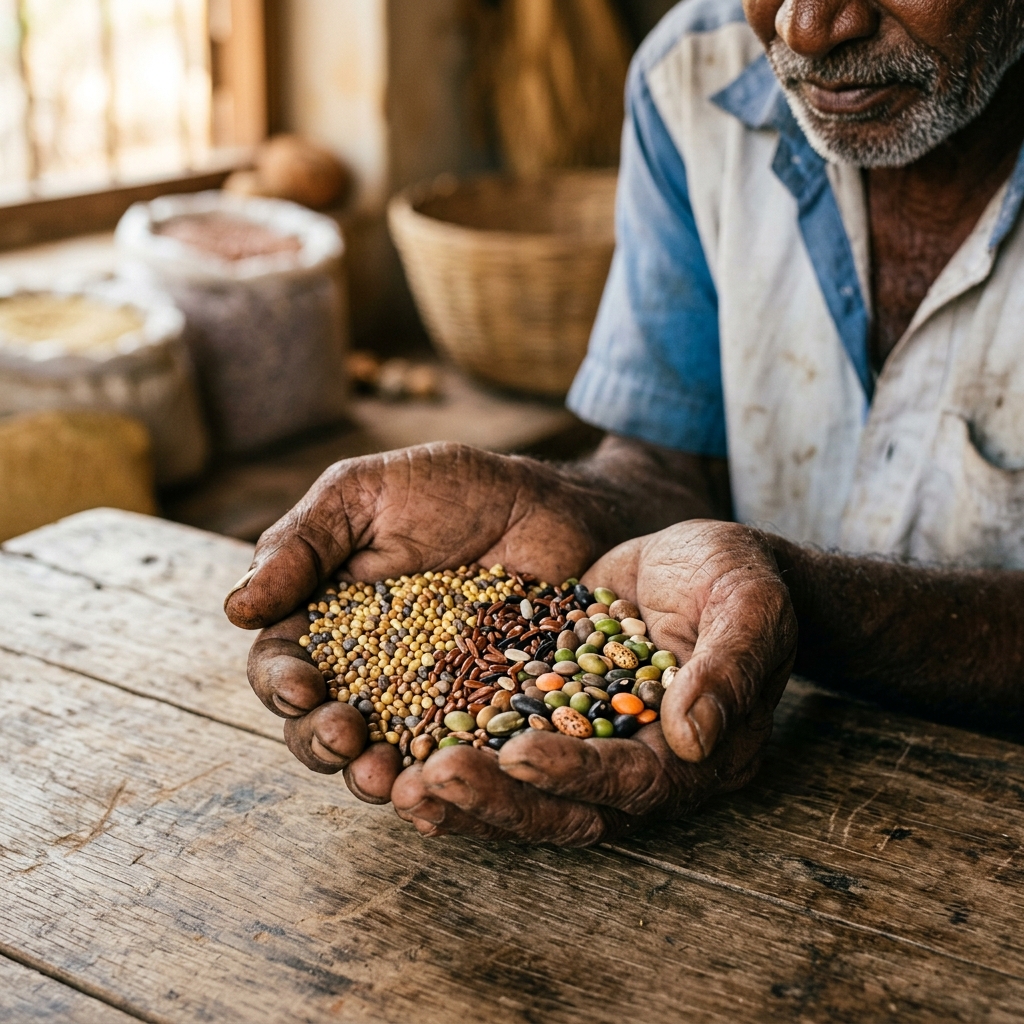
Traditional seed varieties carry centuries of natural adaptation, nutrition, and resilience that modern hybrids simply cannot replicate.
Genetic Diversity
Traditional varieties carry unique genetic traits that provide natural resistance to pests, diseases, and climatic extremes.
Superior Nutrition
Indigenous crops often contain higher levels of essential micronutrients, vitamins, and minerals compared to commercial hybrids.
Climate Resilience
Heirloom varieties have naturally adapted to local weather patterns over centuries, making them more reliable in changing conditions.
Zero Seed Cost
Farmers can save and replant indigenous seeds season after season, eliminating the recurring cost of purchasing commercial seeds.
Low Water Needs
Many traditional varieties are naturally drought-tolerant, requiring significantly less water than high-yielding commercial varieties.
Cultural Heritage
Traditional seeds preserve local culinary traditions, medicinal knowledge, and cultural identity tied to specific crops and cooking methods.
Seed Bank Lifecycle
From identification to community stewardship — how a seed bank comes to life.
Seed Identification
Document and catalog traditional seed varieties from elderly farmers, local markets, and agricultural heritage records.
Collection & Testing
Collect seed samples, test germination rates, and verify genetic purity through collaboration with agricultural universities.
Processing & Storage
Clean, dry, and store seeds in temperature-controlled conditions using traditional and modern preservation methods.
Multiplication
Grow out seed samples to multiply quantities, ensuring sufficient stock for community distribution and exchange.
Community Exchange
Distribute seeds to registered farmer members through a give-and-take system that ensures continuous replenishment.
Community Stewardship
Local committees manage the seed bank independently, maintaining records, organizing exchanges, and training new members.
Seed Exchange Model
Our seed exchange operates on a simple give-and-take principle. Farmers borrow seeds from the community bank and return a slightly larger quantity after harvest — ensuring the bank grows organically while keeping seed access completely free.
-
Borrow seeds at planting season, return after harvest
-
No monetary cost — seeds are a community resource
-
Surplus seeds shared with neighboring villages
-
Complete documentation of every transaction
Farmer Borrows Seeds
1 kg traditional variety
Grows & Harvests
Full season cultivation
Returns 1.25 kg
Bank grows organically
Help Us Preserve
India's Seed Heritage
Every seed preserved is a promise to future generations. Support our community seed bank initiative through sponsorship, expertise, or volunteer participation.